
5.0★ 153+ Google Reviews5.0★ 104+ Yelp ReviewsLicensed & InsuredSame-Day ServiceFamily-Owned Since 2014
    Licensed & InsuredFamily-Owned Since 2014
    MJC Live Bee RemovalMJC Live Bee RemovalSan Diego · No-Kill Relocation
    (619) 550-0687Get a Free Quote
    MJC Live Bee RemovalMJC Live Bee RemovalSan Diego · No-Kill Relocation
    Get a Free Quote
    Back to all posts
    Bee Education

    When Is Bee Season in San Diego - and What Should You Do?

    June 25, 2026
    When Is Bee Season in San Diego - and What Should You Do?
    KEY TAKEAWAYS
    • San Diego bee season peaks March through June but colonies remain active year-round due to the mild climate
    • A swarm resting on a branch may move on within 48 hours - a colony entering a wall will not
    • Africanized honey bees are established in San Diego County and swarm more frequently than European bees
    • You cannot identify Africanized bees by appearance alone
    • Inspecting and sealing entry points before spring is the most cost-effective bee prevention step

    Most of California has a defined window when bees are most active. San Diego doesn’t really work that way. The climate here is mild enough year-round that colonies stay alive through winter and build up faster than they would in colder regions. That said, there is a peak season - and knowing when it is gives you a head start.

    The peak window: March through June

    Spring is when honey bee colonies reach their maximum size after building through winter. When a colony gets too large for its current location, it splits. The old queen leaves with roughly half the bees to find a new home. That’s a swarm - and swarm season in San Diego typically runs from March through June, sometimes stretching into July.

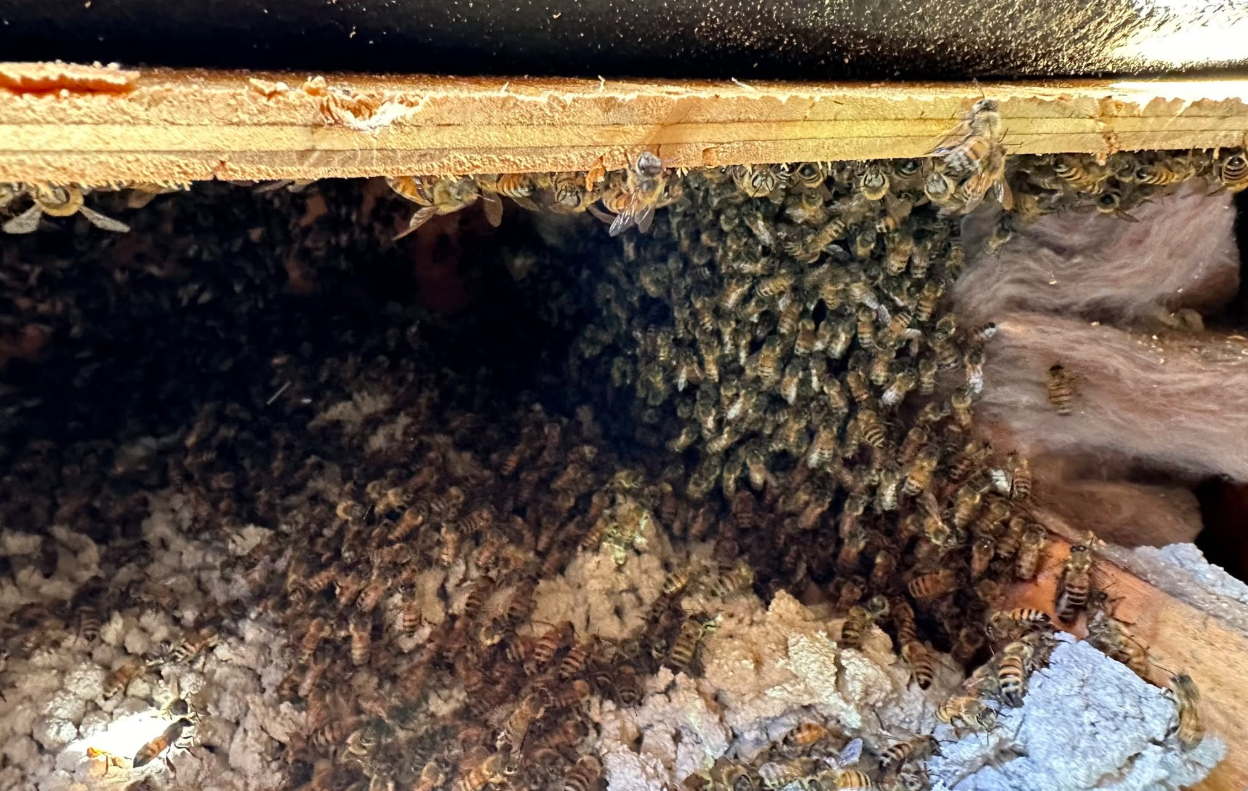
    During this window you’re most likely to see a swarm resting on a tree branch, fence post, or the side of a building. You’re also most likely to notice scout bees inspecting gaps in your eaves, stucco cracks, and roof penetrations. A swarm resting temporarily is different from a colony that has moved in. A swarm on a branch usually moves on within 24 to 48 hours. Scouts inspecting a wall cavity mean a colony is actively choosing your home.

    Why San Diego is different

    Two things make San Diego’s bee season longer and more active than most of California. First, the mild winters. Colonies don’t die back the way they do in colder climates - they keep building, which means they reach swarm size faster and more reliably. Second, Africanized honey bees are established throughout San Diego County. They swarm more frequently than European honey bees, establish colonies in smaller cavities, and are significantly more defensive once a colony is established.

    You can’t tell an Africanized bee from a European honey bee by looking at it. That distinction matters when you’re deciding whether to handle a swarm situation yourself.

    What to do if you see a swarm

    If bees are clustered on a branch or fence and haven’t gone into a structure yet - give it 24 to 48 hours. A resting swarm that hasn’t found a home may move on. Keep people and pets away from the cluster but don’t spray it, disturb it, or try to move it. Disturbing a swarm can trigger a defensive response.

    If bees are entering and exiting a gap in your wall, eave, or roof - that’s no longer a swarm situation. A colony has chosen your home. That requires removal, not waiting.

    Year-round vigilance

    Even outside peak season, San Diego homeowners should check their properties at least once a year - before spring if possible. Look for open eave ends, gaps in stucco, unscreened vents, and roof penetrations around pipes or conduit. Sealing potential entry points before scouts find them is always cheaper than removing a colony after they’ve moved in.

    FAQ

    Frequently Asked Questions

    Activity picks up in March as colonies reach maximum size after winter. The most intense period for swarms and new colony establishment is March through June. That said, San Diego’s mild climate means bees remain active year-round - colonies don’t die off in winter the way they do in colder regions.

    A swarm is a temporary cluster - thousands of bees resting together while scouts search for a permanent home. It looks alarming but usually moves on within 24 to 48 hours if left alone. A colony moving in means bees have chosen a cavity in your structure and are actively building. You’ll see bees consistently entering and exiting the same small gap. That situation won’t resolve itself.

    Yes. Africanized honey bees have been established throughout San Diego County for years. They look identical to European honey bees but behave differently - they swarm more often, nest in smaller spaces, and respond to disturbance more aggressively. Any bee removal in San Diego should be approached as though Africanized bees may be present.

    No. Spraying or disturbing a swarm can trigger a defensive response from thousands of bees at once. If the swarm is in an open location away from people and pets, leave it alone for 24 to 48 hours and it will likely move on. If it’s in a location that poses immediate risk, call a professional to relocate it.

    Walk the perimeter of your home and look for open eave ends, cracks in stucco, unscreened vents, and gaps around utility lines. These are the entry points scouts target. Sealing them before March significantly reduces the chance of a colony establishing in your walls.

    153
    Google Reviews
    104
    Yelp Reviews
    5.0★
    Average Rating
    Same-Day
    Service Available
    2014
    Family-Owned Since

    Bees in your wall? Let's get them out.

    Free inspections. Same-day service. Removal, cleanup, and repair — all in one call.

    Avatar
    "Spotted bees? Talk to us."