
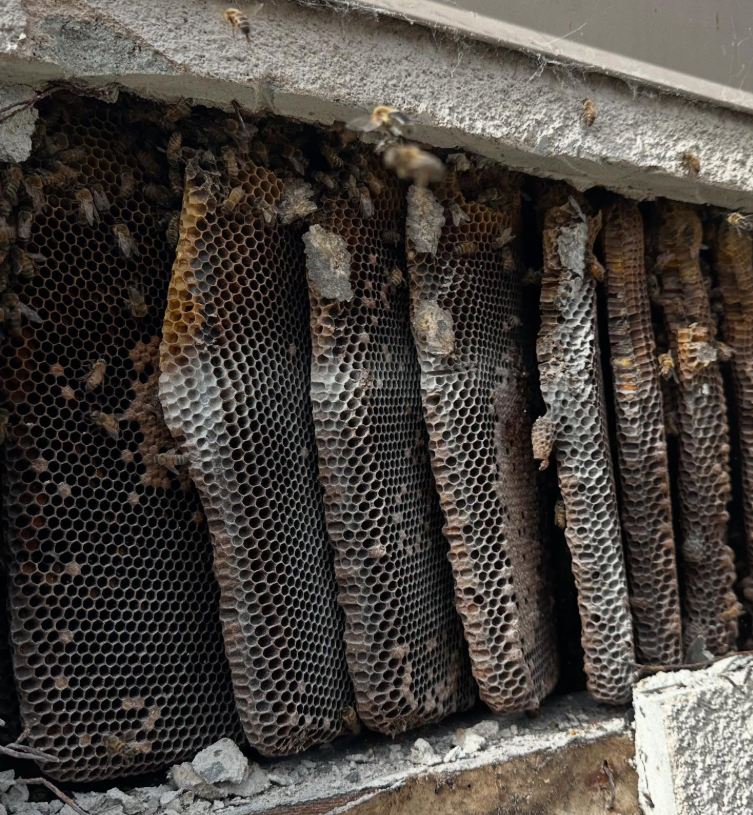
You hear it before you see it. A low hum coming from inside a wall - usually in the afternoon when the colony is most active. Then you notice bees going in and out of the same small gap near your roofline, eave, or siding. That's not random. That's a colony that has moved in and is building.
Why they picked your wall
San Diego homes give bees exactly what they're looking for. Warm wall cavities, protection from weather, and easy access through stucco cracks, open eave ends, or gaps around utility lines. Scout bees find these spots during swarm season - March through June - and the colony follows within days. Once they're in, they build fast.
What not to do
Don't seal the entry point. It's the most common mistake and it makes everything worse. Trapping bees inside a wall forces them to find another way out - sometimes that means chewing through drywall directly into your kitchen or bedroom. Don't spray pesticides into the gap either. Dead bees inside a wall leave comb that melts in summer heat, honey that seeps into drywall, and a scent trail that attracts new swarms the following season.
What's actually in there
A colony that moves in during spring can grow to 20,000 bees by summer. A mature wall colony can hold 40 to 60 pounds of honeycomb. When bees die - whether from pesticide or natural causes - that comb is no longer temperature-regulated. In a San Diego summer, wall temperatures push past 100 degrees. The wax softens, the honey liquefies, and it starts moving through insulation and drywall. Wax moth larvae move in after. The repair bill grows with every week you wait.
What the right removal looks like
Live removal means opening the wall at the colony location, extracting the bees alive, pulling every piece of comb, treating the void with a pheromone neutralizer so the scent trail doesn't attract future swarms, and closing everything back up. The opening is kept as small as possible. The job is documented so your contractor knows exactly what needs to be patched.
That's the whole job. Not a spray through a hole. Not a plug and a prayer. If a company can't describe that process, find someone else.