Most people use the word bee for anything that flies and stings. That's understandable - from a distance, a honey bee and a yellow jacket look similar enough that the difference doesn't seem to matter. It matters a lot when you're deciding what to do about a nest.
What you're actually looking at
Honey bees are fuzzy. That's the simplest tell. They have a thick, hairy body covered in small hairs that trap pollen. Their coloring is a warm golden-brown with dark bands. They're relatively calm when foraging - a honey bee on a flower is focused on pollen, not on you.
Yellow jackets are smooth and shiny. Their yellow and black pattern is sharper and more defined than a honey bee's. They're thinner through the waist and move more aggressively. Yellow jackets are scavengers - they're the ones showing up at your trash cans, hovering around your outdoor meal, and crawling into soda cans.
Wasps - including yellow jackets - have a narrow pinched waist between the thorax and abdomen. Honey bees have a more rounded, compact body. Once you know what to look for, the difference is obvious.
How they nest differently
Honey bees build wax comb in enclosed cavities - wall voids, attic spaces, tree hollows, under eaves. A honey bee colony is permanent. If they choose your wall, they're building a home they intend to keep. Left alone, a colony will grow to tens of thousands of bees and hundreds of pounds of honeycomb over several years.
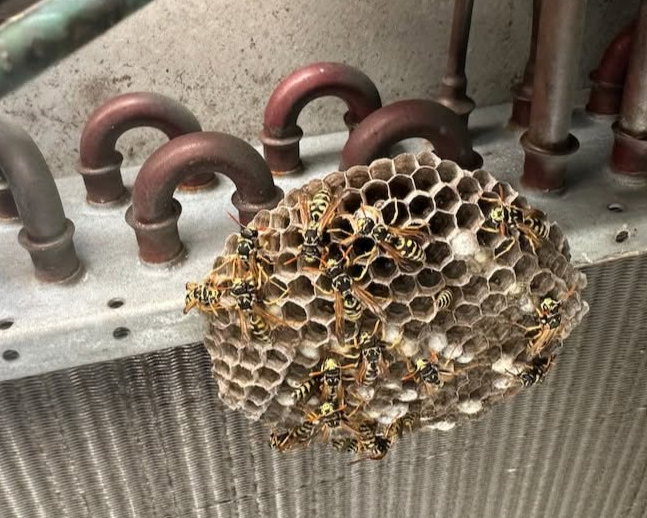
Yellow jackets build papery nests from chewed wood fiber. Common locations include underground burrows, wall voids, attic spaces, and behind siding. Their nests don't produce honey. Yellow jacket colonies die off in winter - the queen overwinters and starts a new colony in spring. That means a yellow jacket problem typically resolves with the season, though the nest location may attract a new colony the following year.
Why the distinction matters
The removal process for each is different. Honey bees require live removal - the colony, the comb, and the pheromone residue all need to come out, or the problem will return. Honey bees are also protected in California, and their role in pollination means responsible removal and relocation is the right approach.
Yellow jacket removal depends on nest location. An underground nest or a nest in a wall void requires a different approach than a paper nest hanging from a tree branch. Yellow jackets are significantly more aggressive when disturbed, especially later in the season when the colony is at peak size.
When you're not sure
If you're not certain what you're dealing with, don't disturb it. Watch from a distance. Honey bees are docile foragers - if the insects you're watching are calm and focused on flowers or a consistent entry point, they're likely bees. If they're aggressive, showing up around food, or flying in and out of a ground hole, yellow jackets are the more likely culprit.
A photo sent to a removal specialist takes about 30 seconds and tells you exactly what you're dealing with before anyone shows up at your property.