
5.0★ 153+ Google Reviews5.0★ 104+ Yelp ReviewsLicensed & InsuredSame-Day ServiceFamily-Owned Since 2014
    Licensed & InsuredFamily-Owned Since 2014
    MJC Live Bee RemovalMJC Live Bee RemovalSan Diego · No-Kill Relocation
    (619) 550-0687Get a Free Quote
    MJC Live Bee RemovalMJC Live Bee RemovalSan Diego · No-Kill Relocation
    Get a Free Quote
    Back to all posts
    Bee Removal

    What Happens If You Leave a Beehive in Your Wall?

    June 25, 2026
    What Happens If You Leave a Beehive in Your Wall?
    KEY TAKEAWAYS
    • The first four weeks are the easiest and least expensive window to remove a bee colony
    • By month two a colony can reach 20,000 bees with significant comb built inside the wall
    • Dead bees in a wall leave comb that melts in summer heat - honey damage to drywall is expensive to repair
    • Pheromone trails persist after removal unless neutralized - attracting new swarms the following season
    • MJC’s Pheromone Neutralization Protocol™ eliminates the scent trail so your wall stops being a target

    Most homeowners who discover bees in their wall don’t act immediately. The bees seem contained, the problem seems manageable, and removal feels expensive or disruptive. So they wait.

    Here’s what actually happens when you wait.

    Week one to four

    A new colony moves fast. In the first weeks, the colony is establishing - bees are building comb, the queen is laying, and worker populations are expanding. At this stage, the colony is relatively small and removal is straightforward. The wall access is minimal, the comb is limited, and the job is done in a few hours.

    This is the window most homeowners miss.

    Month two to three

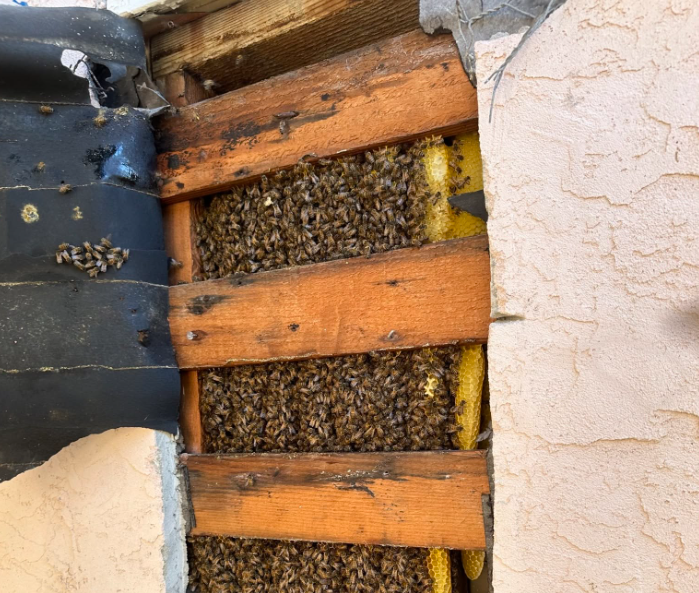
    By the second month, a colony that moved in during spring can reach 10,000 to 20,000 bees. The comb now occupies a significant portion of the wall void. The colony is producing honey and building actively. Removal at this stage is more involved - more comb to extract, larger wall access required, longer job time.

    The other thing that happens at this stage is that the pheromone scent trail strengthens. Bees communicate the location of a good nesting site through pheromones. A colony that has been in a wall for two to three months has left a strong chemical signal in the void. Without proper treatment after removal, that signal persists and attracts new swarms the following season.

    Summer - the heat problem

    San Diego summers push wall temperatures past 100 degrees. A honey bee colony that is alive and active regulates the temperature of its comb - they fan it, they manage humidity, they keep the wax solid. A colony that has been killed with pesticide - or that dies for any reason - can no longer do that.

    When the colony dies and the temperature rises, the wax softens. Honey liquefies. Forty to sixty pounds of comb starts to melt. The honey seeps through insulation and into the drywall. You’ll see staining, soft spots, and eventually a sweet smell that intensifies in the afternoon heat. Wax moth larvae move in shortly after, causing additional damage to surrounding materials.

    This is the stage where a straightforward removal becomes a structural repair job - and the bill reflects it.

    Year two and beyond

    A colony that survives its first year will swarm the following spring, sending scouts to find additional nesting sites - sometimes within the same structure. It’s common to find multiple colonies in adjacent wall voids in homes where an original colony was left untreated.

    Honey residue that wasn’t fully cleaned out continues to attract pests - ants, roaches, and additional bee swarms drawn to the remaining pheromone trail.

    What the right removal looks like

    Live removal means opening the wall at the colony location, extracting every bee and every piece of comb, cleaning the void, and applying the Pheromone Neutralization Protocol™ to eliminate the scent trail that would otherwise draw future swarms back to the same spot. The wall is then sealed and repaired.

    That’s the complete job. Anything less leaves the problem - or the conditions for the next problem - behind.

    FAQ

    Frequently Asked Questions

    Indefinitely, if conditions are right. A honey bee colony in a wall void with a good entry point, adequate space, and protection from weather can survive for years. Each spring the colony grows larger and swarms, potentially establishing additional colonies nearby. The longer they stay, the more comb builds up and the more complex the removal becomes.

    It starts as a soft spot or slight discoloration on the drywall surface. In later stages you’ll see yellowish-brown staining spreading outward from one area, a sweet smell that intensifies in afternoon heat, and in severe cases the drywall becomes soft enough to push through with a finger. Honey that saturates insulation requires full insulation replacement in the affected area.

    The bees may not bother anyone now. The comb they’re building will. A colony left in a wall for a full season builds enough honeycomb to cause structural and cosmetic damage when the wax eventually melts. The colony will also swarm the following spring, sending scouts to find additional nesting sites - sometimes in the same structure. Ignoring it doesn’t make it smaller.

    After a colony is extracted, the void retains a chemical scent trail left by the bees. This signal is invisible but detectable to scout bees the following swarm season - it marks the location as a proven nesting site. MJC’s Pheromone Neutralization Protocol™ treats the void after extraction to eliminate this signal, so your wall stops attracting future swarms. Most removal companies skip this step. We don’t.

    It’s common when the pheromone trail wasn’t neutralized after the original removal. Scout bees from new swarms can detect the residual scent of a previous colony and choose the same location. If bees have returned to a spot that was previously treated, the original removal likely didn’t include pheromone neutralization - or the entry point wasn’t fully sealed.

    153
    Google Reviews
    104
    Yelp Reviews
    5.0★
    Average Rating
    Same-Day
    Service Available
    2014
    Family-Owned Since

    Bees in your wall? Let's get them out.

    Free inspections. Same-day service. Removal, cleanup, and repair — all in one call.

    Avatar
    "Spotted bees? Talk to us."