
A few bees circling the same spot near your roofline, eave, or vent opening - moving slowly, coming back to the same location over and over - isn't random bee traffic. That's scouting behavior. And it means a colony is actively looking at your house as a potential home.
Why they picked your wall
When a honey bee colony gets too large, it splits. The old queen leaves with roughly half the colony to find a new location. Before that happens, scout bees fan out to identify candidates - cavities that are the right size, the right temperature, protected from weather, with a defensible entrance. Your eave gap, open vent, or cracked stucco checks those boxes.
Scouts don't move like foraging bees. They hover. They inspect. They come back to the same spot multiple times over several days. If a scout finds a good location, she returns to the swarm and communicates its coordinates through a waggle dance. The colony votes on it. If enough scouts agree, they move in - fast.
Why this matters for San Diego homeowners
Swarm season in San Diego runs March through June, sometimes into July. Older stucco construction, Spanish tile roofs, and mature trees near the house all increase the odds that scouts will find your property appealing. San Diego's mild winters mean colonies don't die back the way they do in colder climates - they build up faster and have more scouts looking during peak season.
The window you have
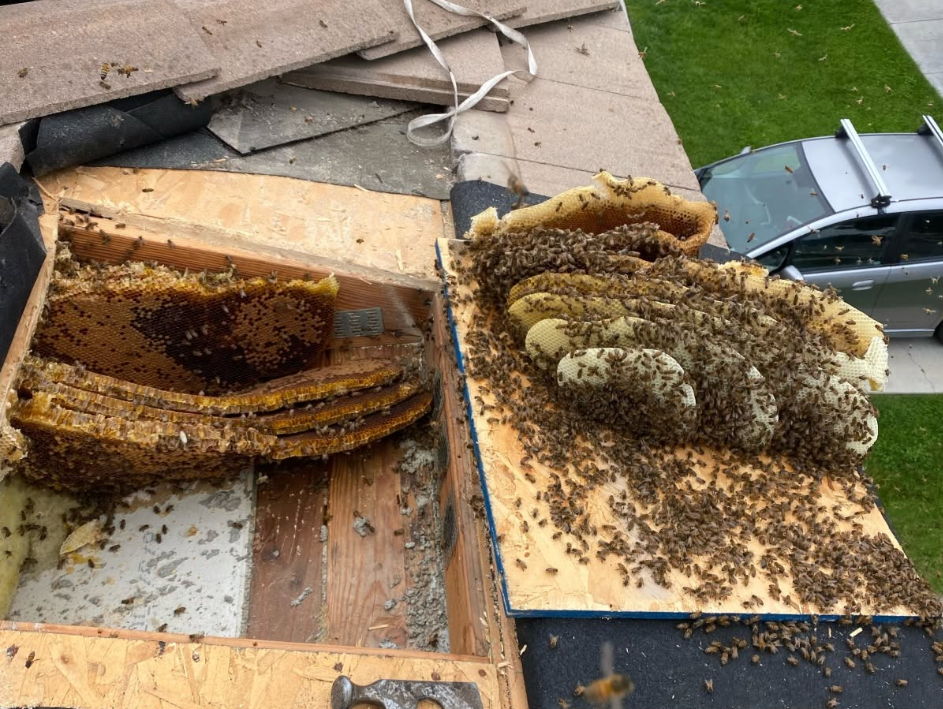
Scout activity is the cheapest problem to fix. A bee proofing visit to seal the entry points scouts are inspecting costs a fraction of what a full colony removal runs. Once the colony moves in and starts building comb, the job changes completely - the wall has to be opened, the colony extracted, the comb pulled, the void treated.
If you're seeing scout behavior - bees hovering in one spot, checking the same gap repeatedly - call a specialist while it's still a prevention job, not a removal job.