5.0★ 153+ Google Reviews5.0★ 104+ Yelp ReviewsLicensed & InsuredSame-Day ServiceFamily-Owned Since 2014
    Licensed & InsuredFamily-Owned Since 2014
    MJC Live Bee RemovalMJC Live Bee RemovalSan Diego · No-Kill Relocation
    (619) 550-0687Get a Free Quote
    MJC Live Bee RemovalMJC Live Bee RemovalSan Diego · No-Kill Relocation
    Get a Free Quote
    Back to all posts
    Wasp Removal

    Wasp Nest Removal in San Diego | MJC Live Bee Removal

    June 28, 2026
    Wasp Nest Removal in San Diego | MJC Live Bee Removal
    KEY TAKEAWAYS
    • Wasps can sting multiple times and signal others in the nest - a disturbed wasp nest is more dangerous than a bee colony of similar size
    • Yellow jackets, paper wasps, and bald-faced hornets are the three most common species in San Diego
    • Wasp colonies peak in late summer - July through September is when nests are largest and most dangerous
    • Wasps do not reuse old nests the following year but the nest still needs to come down after the season ends
    • MJC identifies the species and removes the nest using appropriate methods for each type

    Wasps are not bees. The removal approach is different, the risks are different, and the timing matters in ways most people do not realize until they have already made the situation worse.

    MJC handles wasp nest removal across San Diego County. Here is what you need to know before you call.

    Wasps vs. Bees - Why It Matters for Removal

    The biggest practical difference: bees die after they sting. Wasps do not. A single yellow jacket can sting multiple times and signal others in the nest to do the same. A disturbed wasp nest responds faster and with more aggression than a bee colony of similar size.

    Honeybees also leave behind a colony and honeycomb that need to be removed to prevent re-infestation. Wasps do not produce honey and do not reuse old nests the following year - but the nest still needs to come down, and doing it without the right equipment is how most stinging incidents happen.

    Common Wasp Species in San Diego

    Three types show up most often:

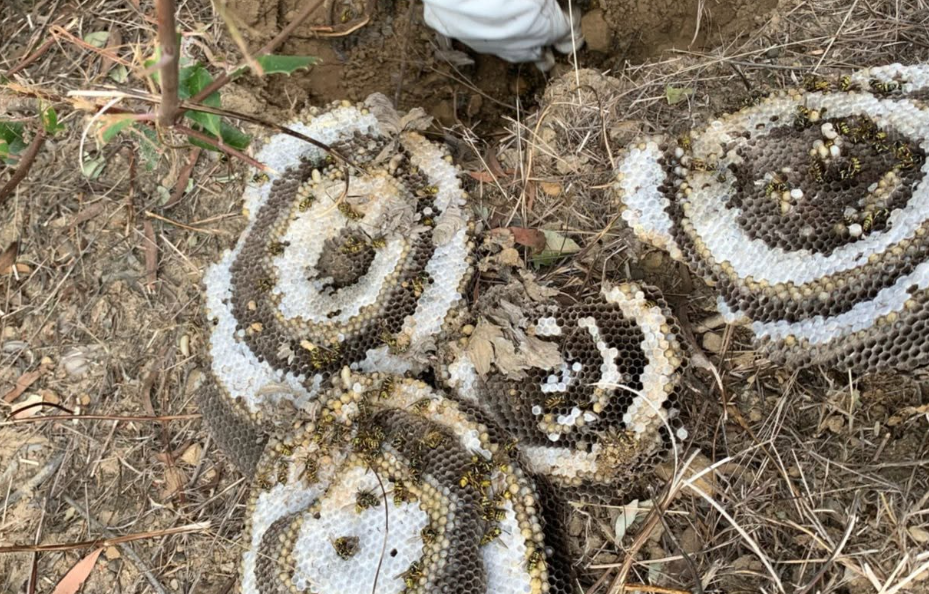
    Yellow jackets are the most aggressive and the most commonly confused with bees. They are smaller, with bright yellow and black banding, and they nest in the ground, inside walls, and under eaves. Ground nests are especially dangerous because they are easy to disturb accidentally.

    Paper wasps build the open, umbrella-shaped nests you often see under eaves, in garage rafters, and on fence rails. They are less aggressive than yellow jackets but will sting if the nest is approached or disturbed.

    Bald-faced hornets are large, black and white, and build the large enclosed gray paper nests sometimes found in trees and shrubs. They are highly defensive of their nest perimeter.

    When Wasp Activity Peaks in San Diego

    Wasp colonies build through spring and reach peak size in late summer - July through September. That is when nests are largest, worker populations are highest, and the risk from a disturbed nest is greatest. By late fall, colonies decline and workers die off as temperatures drop. The queen overwinters and starts a new nest from scratch the following spring.

    This means late summer is both the busiest time for wasp calls and the highest-risk time to attempt a DIY removal.

    What MJC Does for Wasp Removal

    MJC locates the nest, identifies the species, and removes it using appropriate methods. For wasps inside a wall void, that includes getting the nest out rather than just treating the entry point. For ground nests, treatment happens after hours when foragers have returned to the nest.

    After nest removal, MJC can inspect the property for secondary nesting sites and recommend prevention measures to reduce the likelihood of nests forming in the same locations next season.

    Call (619) 550-0687 for wasp nest removal across San Diego County.

    FAQ

    Frequently Asked Questions

    Yes. MJC handles yellow jacket, paper wasp, and bald-faced hornet nest removal across San Diego County. Call (619) 550-0687.

    The main practical difference is that wasps can sting multiple times. Honeybees die after stinging once. Wasps also do not produce honey or leave honeycomb behind, but a disturbed wasp nest responds faster and more aggressively than a bee colony of similar size.

    Wasp colonies build through spring and reach peak population in late summer, July through September. That is when nests are largest and the risk from a disturbed nest is highest. Activity drops in fall as temperatures cool.

    For small, accessible paper wasp nests that are inactive, DIY removal is sometimes manageable. For yellow jacket nests in walls or ground, bald-faced hornet nests, or any nest near high-traffic areas, professional removal is the safer call. Yellow jacket ground nests in particular are easy to disturb accidentally and respond fast.

    Not to the same physical nest - wasps do not reuse old nests. But they do sometimes build new nests in the same general locations year after year if the spot is attractive. MJC can assess the area and recommend prevention steps after removal.

    153
    Google Reviews
    104
    Yelp Reviews
    5.0★
    Average Rating
    Same-Day
    Service Available
    2014
    Family-Owned Since

    Bees in your wall? Let's get them out.

    Free inspections. Same-day service. Removal, cleanup, and repair — all in one call.

    Avatar
    "Spotted bees? Talk to us."