
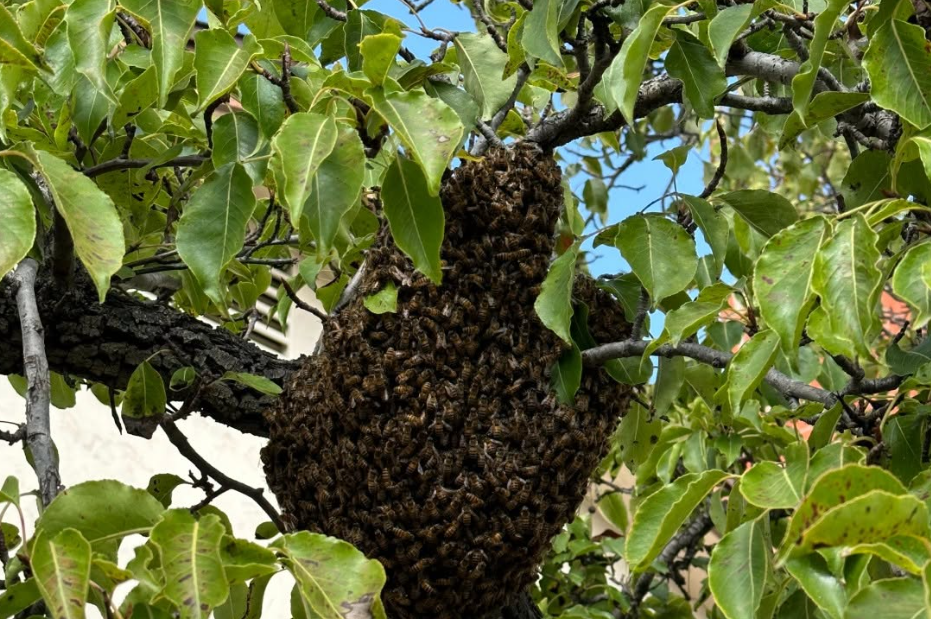
If you’ve had bees removed from your home and they showed up again in the same spot the following year - or if you keep seeing bee activity in the same location season after season - that’s not bad luck. It’s chemistry.
The scent trail problem
Honey bees leave behind pheromones everywhere they establish. These chemical signals serve several purposes within a colony - they coordinate foraging, identify nest members, and mark the nest location. When a colony is removed, the bees are gone. The pheromones aren’t.
The scent trail left in a wall void after removal can persist for years. To a scout bee evaluating nesting sites during swarm season, that signal communicates one thing: this location was chosen before. It worked. Come here.
That’s why bees return to the same spot. The old colony is gone, but they left a map.
What happens when removal is incomplete
There are two ways an incomplete removal creates a repeat problem.
The first is leaving comb behind. Honeycomb that isn’t fully extracted continues to off-gas wax and honey scent. That smell is detectable by scout bees and attractive to them. It also attracts other pests - ants, roaches, wax moths - that compound the problem.
The second is skipping pheromone neutralization. Most removal companies don’t treat the void after extraction. The physical colony is gone, the entry point gets sealed, and the job is called complete. The next spring, a new swarm’s scouts find the same location and the cycle starts again.
The Pheromone Neutralization Protocol
MJC’s Pheromone Neutralization Protocol is applied to the void after every extraction. It chemically breaks down the residual scent signals left by the previous colony, eliminating the signal that would otherwise draw new swarms back to the same location.
This step is what makes a removal permanent rather than temporary. Without it, a well-executed extraction can still result in bees returning the following season - because the location is still advertising itself.
When the entry point wasn’t fully sealed
The other common cause of repeat infestations is an entry point that wasn’t sealed properly after removal. If scouts can find the same gap the original colony used, the location becomes viable again regardless of whether any pheromone residue remains.
Proper sealing means closing not just the primary entry point but also any secondary gaps around the same area. Bees that used a location previously are more motivated to find a way back in than bees evaluating a new site for the first time.
If bees have already returned
If you’re seeing bees in the same spot where a removal was done previously, the colony has likely re-established. The approach is the same as any wall colony removal - extract the colony, pull all the comb, apply pheromone neutralization, and seal the entry point properly this time.
The difference from a first-time removal is that the void may already have residual wax and honey from the previous colony, which adds to the comb extraction work and makes full cleaning of the void more important.